


Jackie Zykan: Fir Tree Incense

Jackie Zykan

“Why don’t you just get a fake tree?”, my son asked me. Suffice to say, this question is thrown at me every single year. From a multitude of curious inquirers, not just him. And my response remains the same, every year. And I have no intention of entertaining the alternative.
“It’s just not the same”.
Granted, the question isn’t undeserved to be asked, and I am aware it typically follows every rant I go on about the layers of suffering which come with the care and feeding of a real tree.
My salty tone has become a holiday tradition in its own right at this point, onset by the act of lighting my money on fire in exchange for scratches on the roof of my car and sap in my hair as I wrestle it into the house. Masochism at its finest, and an act of unnecessary valor. One more thing that needs to be maintained, dressed and watered, until it becomes one more thing to clean up. And then there are the needles. The gifts that keep on giving throughout the year, as though a never-ending supply was emerging from beneath the floor boards, not the branches. Tiny souvenirs which surprise and delight, reminding you well past the holidays of the question “why don’t you just get a fake tree?”.
Because it’s just not the same. That’s why. And the point of traditions is to hold firm to repetition, no? The situation is of course not about the right way to have a tree or the wrong way to have a tree, and is subject to considering which perspective it applies. If you’ve only experienced having an artificial tree, then, arguably, the same tried and trusted, sap free, pre-lit, reusable, consistent, convenient, less laborious option sans dropped needle mess IS the same. How often do you experience an individual questioning your judgement, asking “why don’t you just get a real tree?”, to which you may respond with any number of logical reasons. The two scenarios are interesting, one involving the receipt of subtle shaming for choosing the harder road, and the other involving giving in to the collective pursuit of convenience. Stuck in my ways, the option of a boxed tree has never appealed to me, but I have come to realize this year that it’s actually not the rationale of the logistical pros and cons list which now makes me question my choice. Rather, it’s my annual soapbox of agony about it which is making me realize the subject may be up for debate after all.

The moment I begin feeling burden over bliss with the tree is the moment it makes sense to get one in a box and wave the white flag.
It may be just a tree, but it begs to open an entire can of worms. How many traditions do we uphold despite the suffering they cause for the sake of keeping them alive? How many of those still yield more bliss than burden? In what ways can we recalibrate that scale, and if not, can we accept the alternative and put them to rest?
Why don’t I just get a fake tree? The point isn’t to have a decoration that takes up generous space in the living room. The point is the smell. Plain and simple. Without the smell there is no doorway to access the memories of Christmas. The ornaments, the lights, the colors, all irrelevant. Trompe L’oeil novelty at best, and a false entry point into true connection of memories rich with emotional association. That’s why I refuse to let it rest. However, this doesn’t solve the suffering which inspires my seasonal rants. Desperate for any fraction of resolution from the mess, I got curious about what really lies in the depths of my enduring of the process, and suffice to say that after some contemplation, this season I discovered a method to avoid questioning my decision ever again.
The whole point is the smell. So how can I maximize that experience while also lessening the annoyance from what feels like a high maintenance pet? Blessings and curses are two sides of the same coin, so what happens if I take the most irritating aspects and turn them into my favor?
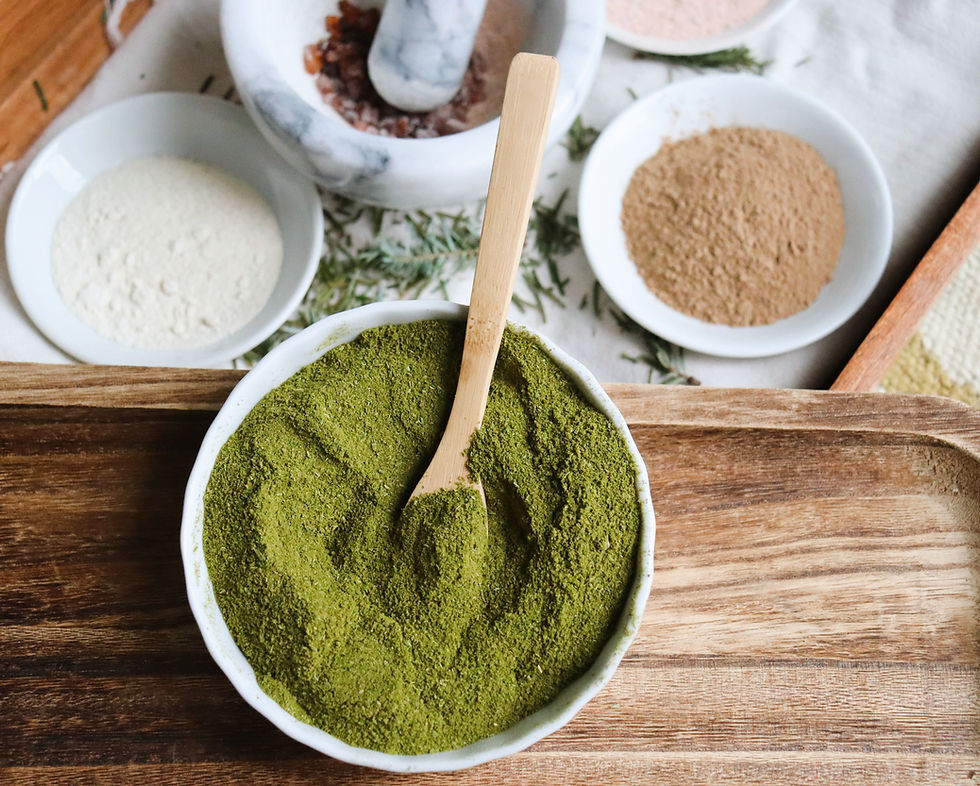
The mess of fallen needles. The incessancy of a watering schedule. The guilt of wastefulness. Wrestling with lights. These elements all seemed to be good reasons to get a fake tree. But they’re equally what can contribute to the beauty of a real one…when the whole point is the smell.
Turning fallen needles into incense powder is my way of celebrating the vintage of the tree and holiday. I can finally relax the pressure to stay on schedule for watering. If the tree gets dry and drops more needles, it yields more incense making material. The tree “mess” is providing the ingredients to celebrate the scent, and becomes something to look forward to, not irritated by. Gone is the fear of removing the lights and containing the explosion of dead needles that hits the living room. Instead, this is a moment to celebrate the abundance of building blocks to reuse and continue the fragrance well into the new year- or even years to come.

This new optimistic approach is not without a key regret though. I will forever wish I had thought to do this sooner. The only reparation for that now is to share the method and invite you to join me in beginning a new tradition. One that alchemizes the mess into bespoke sensory memories. I am fully aware that the act of trimming a tree does not apply to all cultures, but the messaging remains the same even if you celebrate the winter season in other ways. There is always space for the reflection and auditing of traditions to update our systems in a quest for personal joy. Every curse can be a blessing. You need only flip the coin.
Fir Tree Incense
• 8 tsp Fir Needles, dried and ground
• 1 tsp Frankincense, ground
• 1 tsp Myrrh, ground
• 2 tsp Makko powder
Directions: Dry Fir branches in a warm oven or gather dry needles which have fallen. If using whole branches, remove the needles once dry. Process needles into a fine powder in a coffee bean grinder. I recommend using a metal fine mesh strainer with the powder to sift out any larger pieces, yielding a smoother dough. Mix all ingredients in a bowl with just enough water to create a pliable dough (about 4-5 tsp). Portion out the dough into ¼ tsp scoops, then roll into 4” sticks. Place on a parchment paper lined baking sheet in a warm oven until completely dry. This will take a few hours.


Challenges become more meaningful with cool math games turning logic into entertainment. You’ll enjoy every moment spent playing.
The enhanced graphics and animations in Basketball Stars 2026 provide players more realistic and organic motions. Every match is more exciting when there are visual effects during shoots, steals, and blocks.