


Seer And The Sword - Full Article

By: Antonio Pantoja

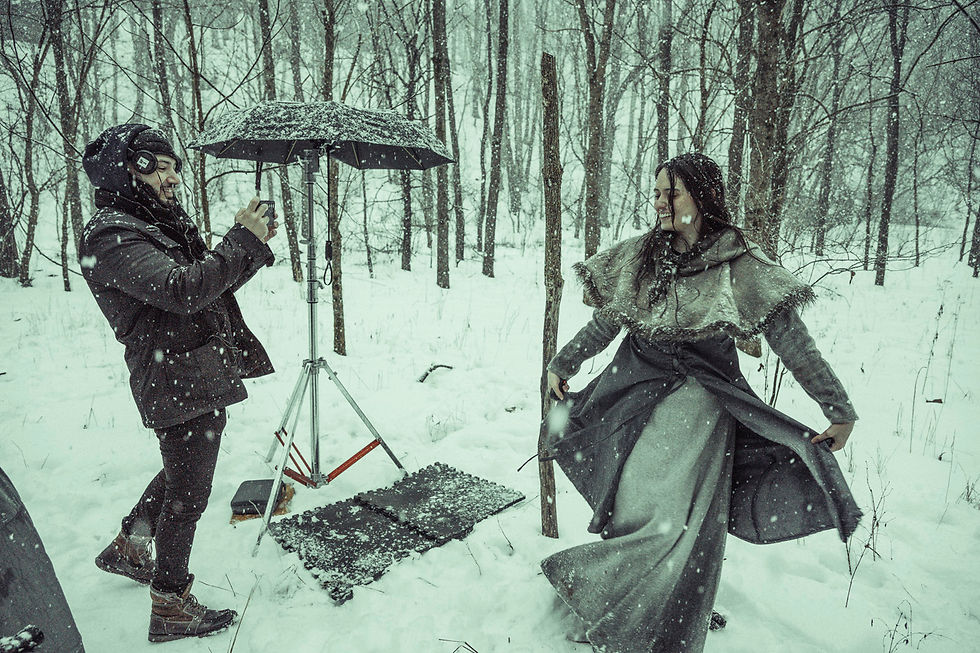
The Seer and the Sword started as a very simple idea that explores one question: how far would a parent actually go to save their child? But making this film became the most grueling shoot the cast and crew had ever been on. The elements almost prevented it from happening. The irony is that those same elements were written into the script, and somehow, by happenstance, the world gave us exactly what we asked for. We got snow, sleet, and freezing temperatures. Just how it was written.
A lot of equipment was broken because of the harsh conditions. It was almost unbearable for the crew, but imagine John Wells, our lead actor, wearing nearly eighty pounds of steel armor. Eighty pounds of steel armor turns into a refrigerator when you're standing outside in the cold, and then imagine being shirtless for several hours in nine-degree weather, covered in blood and prosthetics. That was John.
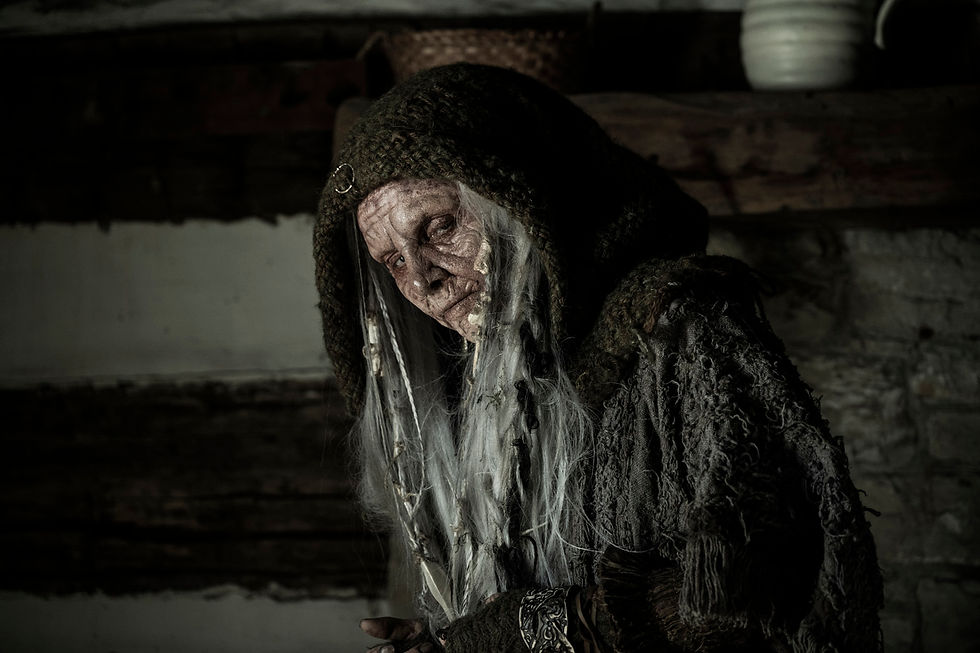
Melissa Bowen, who appeared in Superman (2025), plays the Oracle in our film. Melissa sat through five and a half hours of prosthetic makeup every day. Originally, we needed to cast a woman in her 70s for the role, but Melissa's performance was so perfect that Sebrina, John, and I looked at each other and basically said, "We have to figure this out." So we had to bring in the best. Because if the makeup didn't work, the film didn't work.
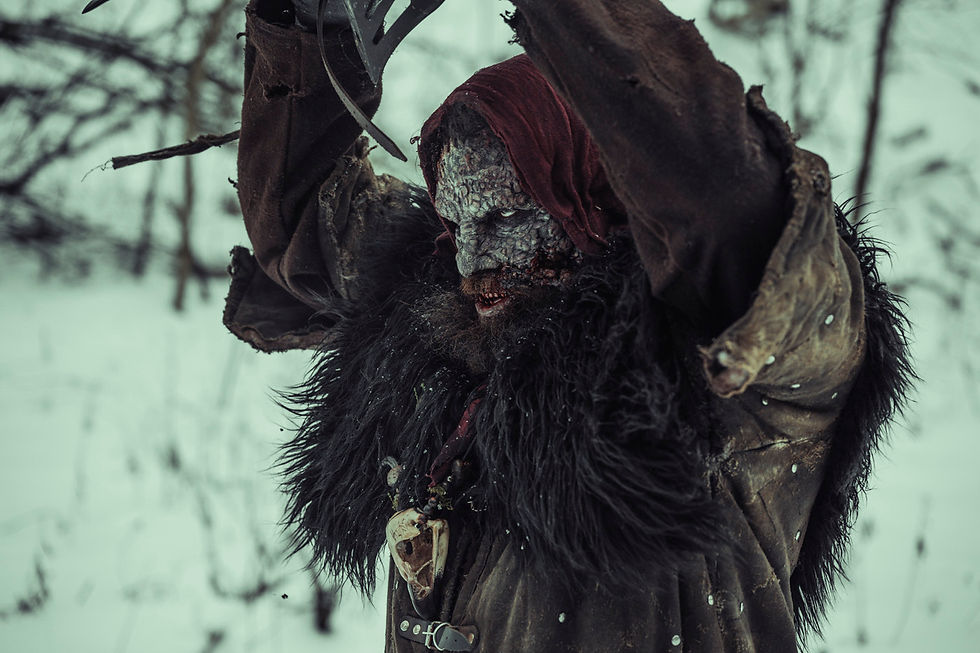
Enter legendary makeup effects artist Vincent Guastini, whose credits include Super Mario Bros., The Last of the Mohicans, Dogma, Requiem for a Dream, and a list that could go on forever. Probably one of the only people on the planet who could pull something like this off believably.
Casting a child is one of the hardest things you can do when making a film; we looked at nearly 300 auditions. Then casting director Sarah East reached out and told us she had the perfect kid, someone local. A girl who went to school with my daughter, Echo. I didn't believe her. Then we met Ellie Gullo. She blew our minds from the moment she walked in; she was perfect. The film simply does not work if Lyra doesn't work, and Ellie was exactly what we needed. She brought something to that character that you cannot manufacture or direct into somebody.
The incredible wardrobe was all made by John Wells himself. Every character has a personality that is spoken through the clothing. There is history in what they wear; you can look at these characters before they ever say a word and understand something about who they are.

At its core, though, The Seer and the Sword is a film about carrying grief. It is set in an unknown world where monsters roam the land and bounties are posted so that hunters can protect the realm for coin. The film introduces Therin, a bounty hunter whose wife is expecting a child. He accepts what he believes will be his final mission before welcoming his new daughter into the world. Then we jump forward ten years. Therin has traded hunting monsters for hunting game, doing whatever he can to keep his family fed and isolated from the dangers of the outside world. He has spent years trying to leave that life behind. But what happens when Therin's past comes back to haunt him?
We were incredibly lucky with our locations. Valaterra truly believed in the spiritual message behind this film and opened its doors to us. Historic Locust Grove was equally kind and generous.
Every actor in this film brought something magical, and just wait until you get a load of the bandits. Crixus (Scotland) was especially terrifying in an indescribable way. There are so many people who came together to make this film possible, and I will never be able to properly express how thankful I am.

Most of all, Sebrina Scott, who co-wrote and produced the film with me. Sebrina was actually a major inspiration for the film when I wrote the initial draft. I sent it to Sebrina and John almost immediately. Because Sebrina has lived the nightmare at the center of this story, I knew this film needed her fingerprints on it. And she took what I thought was a decent script and turned it into something beautifully haunting. John called me almost immediately after reading it and said, "How can I play Therin?" He hadn't even spoken to Sebrina yet. What he didn't know was that I had written Therin for him. Sebrina and I sat on the phone every single day for hours. For nine months.
The three of us had dreamed about making a film together for years. Sebrina and I were on the same page about the artistic direction of the film from the very beginning. While I may have the title of director, I made every major decision with John and Sebrina. This film belongs to all of us.
And there are so many other people who helped bring it to life. A film of this magnitude only gets made because people believe. I sent the script to Amelia Frazier Theobald while she was overseas because I thought she might actually have some time to read it. She called me almost immediately and told me, "We have to make this film." I had written a blacksmith role into the story from the beginning because you can really only write from your lived experiences and the people around you. Amelia is a jack of all trades. At one point in her life, she was a blacksmith. And she would tell me little things over the years that stuck with me.
Then enter Sherman Brown and Knight Shamrock. Sherman believed in me at times when I didn't believe in myself. He pushed me. He inspired me. And he became an incredible producer on this film.
Then there were Kristen and Matt Gullo, who quite literally saved our behinds. We had a final portion of financing begin to fall through. People needed to be paid. They overheard a conversation and saw how afraid we were that everything might collapse. And they saved the film.
Our original director of photography unfortunately had to step away about a week before we started shooting. We didn't know what we were going to do. Looking back, though, I am incredibly thankful things happened the way they did, because Andrew Robinson stepped into the role and treated this film like it belonged to him. He knew the script better than I did. It mattered deeply to him. And you can see that on the screen.
I also never work without Herschel Zahnd. There are so many other people I could thank that this article would eventually turn into an end-credit sequence if I listed everyone.
Right now, the film is in the hands of Matt Niehoff and the team at ThoughtFly, going through the final stages of editing, color, and visual effects. After that, it goes to Joe Stockton at Post 237, an absolute master of sound and musical score.
Everyone who worked on this film dumped their heart and soul into it. They endured brutal conditions and just kept pressing forward. This film is deeply personal to me for a lot of reasons. I wrote the first draft in four days while I was in a very dark place. But once it became real, once people started saying yes and everything began moving forward, the film became important to me for a completely different reason.
I had gotten people I loved, respected, and looked up to involved. And I couldn't let them down.
But they became so emotionally invested in the film themselves that eventually I realized something. None of us were going to let it fail. There were moments on set when I would watch my close friend John going through some of the most physically and emotionally brutal conditions I had ever asked of an actor, and I would just break down and cry. Herschel or Sebrina would put their arms around me. I hated putting John through it. There were moments when I genuinely wondered if the entire thing had been a mistake. I know where John had to go inside himself to bring this performance out. And knowing Sebrina's connection to the story, I hated that she had to stand there and watch some of those scenes unfold. But I know now that it was worth it.
I think what we collectively created is going to have a profound emotional impact on people. And I think that message is necessary right now. The Seer and the Sword isn't simply a collection of performances on a screen. It's a warning shot about carrying grief. About what happens when pain becomes part of your identity. About what we are willing to sacrifice for the people we love. And about what happens when we carry something for so long that we no longer remember who we were before it. So many of us are already doing that.

IN THEIR OWN WORDS
Why is this project important to you?
John Wells, Therin:
I couldn’t have imagined doing that with two people I trusted more than Antonio and Sebrina. The emotional heart of the story also carried very personal weight, especially for Sebrina, so there was a responsibility to honor that.
Sebrina Scott, Co-Writer and Producer:
This project is important to me on two major fronts.
First, I lost my daughter four years ago. When Antonio first sent me the initial script, I didn't love it. It was far gorier and stranger than what I would normally be drawn to. But underneath all of that, there was an authenticity, a truth, that I felt very deeply.
When he asked me to co-write it with him, I jumped at the opportunity. I knew this was a chance to write something I loved with someone I loved, but it was also an opportunity to communicate something I understood personally: the absolute insanity of what parents will endure to protect their children. The hope we cling to when, somewhere inside, we know all may already be lost. And ultimately, the depth of the grief that never really ends when you've lost a child.
I knew those things personally, and I saw an opportunity to bring that truth and authenticity to the screen.
The second reason this project was important to me is more personal to my own career. As a woman, I think it can be difficult to demonstrate your abilities when those abilities aren't physically visible on screen. I was an actress, so it was easy to put a photograph or a scene online and have people immediately see what I could do. Writing doesn't work that way. Your work has to speak for you, and I had very few examples of my screenwriting that anyone could see.
There are a lot of people who believe they're good writers. Writing a screenplay well is a very different thing. You have to be able to visualize the scene, understand how it will play, hear the dialogue coming out of an actor's mouth, and understand what can be communicated without dialogue at all. I knew I could do that, but very few other people had seen it.
Antonio had always believed in that ability in me. So when he asked me to co-write this with him, it meant a great deal. He believed I was capable of something that most people had never seen me do. I wanted to prove him right, but I also wanted to prove it to myself.
So the film became very personal to me for two very different reasons: my daughter, and discovering another part of myself as a filmmaker.
Can you tell us about the wardrobe process?
John Wells, Therin:
Wardrobe was one of the first things we discussed because we knew it could either sell the world or destroy it.
Nothing exposes a low budget period film faster than clothing that looks like a costume. These had to feel like clothes the characters had slept in, fought in, worked in and repaired for years.
I’ve always considered wardrobe part of my acting process. Before a character speaks, what they’re wearing has already told us where they come from, what they do, what they’ve survived. Good wardrobe quietly tells a story. Poverty. Profession. Vanity. Practicality. Where they’ve traveled. What they’ve lost. What they’ve kept.
We sourced armor, tunics, fabrics, leatherwork and accessories from a number of places, and several pieces I handmade specifically for the film. My friend William Wells, no relation, also created original leather and archery pieces, including quivers, bows and arrows.
Nothing went in front of the camera untouched. I spent months dyeing, fading, staining, tearing, soiling, repairing and weathering pieces by hand. Dirt had to collect where dirt naturally would. Fabric needed sun fading. Armor and belts needed believable rust and wear.
Ironically, most of those details may never consciously register with an audience, but that’s the goal, because the best production detail disappears into belief.
If someone looks at Therin and thinks, “That man has been wearing that coat for ten years”, rather than, “That’s a nice costume”, then we’ve done our job.
How did you prepare for Therin?
John Wells:
It became less about preparing for Therin and more about slowly rearranging parts of my life around him.
I spent the better part of a year with the character. I had countless conversations with Sebrina and Antonio about who he was and what the story needed from him, while also finding the pieces of him that had to belong to me.
Medieval fantasy has always been the genre closest to my heart, so Therin felt almost like a character I had been unconsciously collecting pieces for since childhood.
Physically, I changed the way I trained. It wasn’t looking like a modern gym-built man or superhero. I wanted the body of an aging monster hunter and woodsman, strong by necessity, not vanity.
I also trained constantly with the sword until it stopped feeling like a prop and felt more an extension of myself. By the end of production, hanging it up actually felt strange. I felt almost naked without it for a bit of time. To be honest, six months later, it’s still leaning against the wall near my bed in my line of sight.
During development, I kept myself immersed in the universe. Music, scores, films, artwork. I turned down several acting jobs over the year because I didn’t want to keep climbing in and out of Therin’s head.
But the most important work was psychological.
I also fleshed out a life for him beyond the script...I built memories for him that aren’t in the screenplay. Relationships. Small regrets. Moments with his daughter. Things he might have done as a young man that embarrassed him. Places he’d slept. People he’d failed. His relationships with religion, his gods, death, violence, and himself.
None of that really appears onscreen, but acting is often building an enormous invisible structure so the audience can see through one small window. It’s the blueprint to a cathedral. From the outside, you won’t see the framework, but it’s what gives shape and integrity.
By the time we filmed, I had shared an identity with him for almost a year.
We weren’t simply making a fantasy movie. We were taking very real grief, love, fear, and loss and placing them inside a myth to share.
I love fantasy and escapism, but I think the best fantasy doesn’t just help us escape reality. It gives reality a new perspective so we can look at it differently.
Was there a moment where you felt that The Oracle clicked for you and you understood her?
Melissa O. Bowen, The Oracle:
I was drawn to this character from the start of the audition process. She was wonderfully witchy, and there was no telling if we should be wary of her true intentions. Over the course of final rewrites, development of both her past and foresight gave me further depth into her story. The language is so beautifully written and helped me unlock her voice. That was where I found clues to really dive into the Oracle and connect the dots of her motives.
What kept you going despite how difficult it was?
John Wells:
With filmmaking at a point, commitment stops being enthusiasm and becomes responsibility. In the beginning, excitement drives you. Eventually the romance disappears, and you’re standing in freezing wet darkness, exhausted, facing another problem no one has the money or manpower to easily solve...That’s when you really find out whether you meant what you said at the beginning.
This was ours. Our names were on it, our credibility was on the line, we’d made promises, and people had trusted us enough to come into the cold and help us make it. Throwing our hand up or failing emotionally wasn’t an option.
I’ve worked in this industry long enough to know passion doesn’t finish a movie alone. Discipline does. Responsibility does.
There was also something appropriate about the hardship, to be honest. Therin’s story is about continuing forward while carrying something unbearably heavy. At times, making the movie felt exactly like that.
Sebrina Scott:
Antonio's optimism and belief, John's pragmatic responses to my worries, and more than anything, knowing that I was writing and producing this for my daughter. For Sunny.
This entire film is an expression of my own grief, so it is incredibly personal to me. There was never really a point where stopping felt like an option.
We had so many last-minute obstacles during production, particularly as a producer on this. There were plenty of moments where the practical answer might have been, "This isn't going to work." But my mindset, as the producer, was always, "Okay. Then how do we solve it?"
There was no way I was going to give up on this film. It was far too special, and ultimately, I knew exactly who I was making it for.
Melissa O. Bowen:
John was the bedrock during filming, and his work held everyone to high standards. He showed the utmost strength of character, battling through severe cold in suits of armor while carrying intensely emotional work. His level of commitment was empowering to the whole team pushing through the elements to reach the end goal, one day at a time.
What makes this film different?
Sebrina Scott:
The film is dark. It's absolutely bleak. But more than anything, I think it's honest.
There is a truth to the grief in this story, the grief of fighting monsters and still losing. And there is a strange beauty in that, as dark as it is.
We weren't interested in making a story where everything ultimately works out because that's comforting. Sometimes you fight as hard as you possibly can, and you still lose. Sometimes there isn't a light at the end of the tunnel. And yet, you keep fighting.
I think there are a lot of people who will recognize themselves in that.
There are parents who have fought impossible battles for their children, parents who have lost children, and people who have spent years carrying grief while still trying to live their lives.
This story is for them.
That's what makes it different to me. Beneath the fantasy, the violence, and the mythology, the emotion is real.
What was your favorite part about making this film?
Sebrina Scott:
Writing it.
Full stop.
The nine months I spent writing this story with Antonio were my favorite part of the entire process. I loved discovering the characters, challenging the original ideas, finding new scenes, and watching the story become something neither of us could have created alone.
There is something incredibly satisfying about taking an idea that exists only in your head and slowly building an entire world around it.
And in this case, I got to do that with someone who trusted me enough to let me help shape the story. That's something I'll always value.
What do you hope audiences feel when the credits roll?
Melissa O. Bowen:
I think every individual will leave this film with a different sensation depending on their own lived experience.
Grief is often a lonely experience, and seeing a reflection of our lived experiences on screen has always been a profound tool for healing and finding connection. If one person finds solace in shared experience, I think the film will have accomplished what it was meant to do.
John Wells:
More than anything, I just hope they feel something.
We’re surrounded by “content” now. We watch something, close the screen and immediately move to the next thing. I hope this one lingers.
I hope audiences feel like they walk alongside Therin closely enough that they feel the cold, the weight, the exhaustion and the small flicker of hope pulling him forward.
And when they reach the end, I hope something in his journey feels familiar.
Fantasy is a powerful genre. The circumstances can be impossible, but what is felt while facing them often reflect our own humanity.
If people leave entertained, I’ll be grateful. If they leave moved, I’ll be proud. But if they carry even a small piece of the story with them afterward... something they recognize in their own grief, love or humanity...then I think we accomplished what stories are ultimately meant to do.
Sebrina Scott:
I hope the audience walks away feeling that we did justice to people who understand what Therin is going through.
I don't necessarily need them to feel that there is a light at the end of the tunnel. That's not really what this story is about.
I want them to recognize the truth in the fact that we never stop fighting for our children. Even when the fight changes.
There are people who spend their entire lives carrying that kind of grief and still finding the strength to keep going. I wanted to honor that.
For me, the film is ultimately about the lengths we will go to protect our children, and what remains of us when we can't.
I hope parents see themselves in it. I hope people who have experienced that kind of loss feel seen by it.
And most of all, I hope they understand that even when we know we can't win, we don't stop fighting for the people we love.


Comments