


Beargrass Thunder Asks Residents to Consider a More Native Approach to Their Lawns

By Alisha Proffitt • Photos By Matt Johnson and provided by Beargrass Thunder

In many American cities, the sight of a closely trimmed and pristine lawn has long been treated as a sign of order. In Louisville, a growing movement is asking residents to reconsider what a healthy landscape can look like. At the center of that conversation is Beargrass Thunder, a local business leading a community effort encouraging people to turn portions of traditional lawns into gardens that support pollinators, wildlife, and even local food production.
The group takes its name from Beargrass Creek, the stream that winds through Louisville before joining the Ohio River. Before urban development, the creek corridor supported a diverse mix of grasses, wildflowers, and wetlands. Today, most nearby properties are dominated by short turf grass. Supporters of Beargrass Thunder believe that restoring some of that biodiversity can improve soil health, reduce flooding, and reconnect residents with the natural systems around them.
Beargrass Thunder is operated by Jody Dahmer and Mariah Corso, who founded the initiative as a way to help homeowners, neighborhoods, and developers rethink how land is used in the city. Their work utilizes environmental education with practical guidance, helping residents navigate local ordinances, HOA rules, and planting decisions while introducing them to native species that thrive in Jefferson County. The project functions much like a grassroots network, bringing together gardeners, conservation advocates, and residents interested in restoring native landscapes on private property.
The group functions much like a grassroots network, bringing together gardeners, conservation advocates, and residents interested in restoring native landscapes on private property.

Their work has unfolded alongside a significant change in local policy. For years, Louisville’s code enforcement rules did not clearly distinguish between unmanaged weeds and intentional native gardens.As a result, thousands of homeowners received citations for landscaping that city officials considered overgrown. A review by members of the Louisville Metro Council found that roughly 21,000 potential garden properties had been cited within a single year. When the issue was reported by NPR, public response was swift.
The outcry helped push Louisville to adopt a new Natural Landscape Ordinance that recognizes native plant gardens as legitimate landscaping rather than violations. The ordinance, developed through the city’s sustainability office, allows residents to cultivate native plants as long as they are maintained responsibly. For supporters of Beargrass Thunder, the change opened the door to something larger than simply avoiding fines. It made it possible to actively encourage residents to plant flowers and food.
Much of the organization’s work centers on helping people understand what a native garden looks like in practice. A typical lawn in suburban America consists of shallow rooted grasses that require regular mowing and watering. Native grasses and wildflowers function differently. Their roots can extend several feet into the soil, improving the ground’s ability to absorb rainfall and reducing runoff during storms.
This distinction matters in a city with such an abundance of waterways and limestone geology. Flooding has become a growing concern across the region, and shallow lawns often contribute significantly to the problem by shedding water rather than absorbing it. In the past, the landscape around Beargrass Creek resembled the environment still visible along Floyds Fork on Louisville’s eastern edge. When urban development intensified during the twentieth century, many waterways were straightened or confined to concrete channels, and surrounding land was converted to closely managed grass.
Beargrass Thunder encourages residents to think about their property as part of a larger ecological network. A homeowner might keep a mowed lawn near a picnic table or play area while allowing another section of the yard to grow into a meadow filled with native plants. That balance allows wildlife habitat and human comforts to coexist.

The approach also raises practical questions for homeowners associations and landscaping companies. In many developments, HOA rules require uniform lawns that are cut on a strict schedule. Changing those expectations can take time, but supporters of native landscaping note that HOA bylaws are often easier to revise than city ordinances. Some Louisville neighborhoods have already updated their language to permit gardens designed for wildlife or food production.
For landscaping companies, the shift may offer new opportunities rather than eliminating work. Native grasslands and meadows still require maintenance. Instead of weekly mowing, a meadow is typically cut back once each year to prevent trees and woody plants from taking over. Companies that traditionally focus on turf grass can adapt their equipment and services to manage these landscapes as well.
Beargrass Thunder also stresses the importance of choosing plants responsibly. Not every fast growing vine or flower belongs in a native garden. Some species classified as noxious weeds can spread rapidly through wind or bird dispersal and damage nearby farms. Kentucky maintains an official list of plants that are illegal to cultivate statewide because they threaten agricultural crops or local ecosystems. Groups such as the Kentucky Department of Fish and Wildlife Resources and researchers at the University of Kentucky track these species and provide guidance on responsible planting.
The distinction is important in a state where farming remains a major industry. Seeds from invasive plants can travel outside of property lines and create problems for neighboring corn and soybean fields. Beargrass Thunder encourages gardeners to focus on plants that are native to the region and beneficial to pollinators such as bees and butterflies.
In Jefferson County, the effort also connects to a unique piece of local biodiversity. One rare plant, Kentucky glade cress, grows naturally only in small pockets of limestone soil around Louisville. Conservationists worry that continued development could erase these fragile habitats. Some developers near the Parklands area have begun exploring the idea of incorporating private nature reserves into residential projects, allowing residents to live near protected ecosystems rather than replacing them.
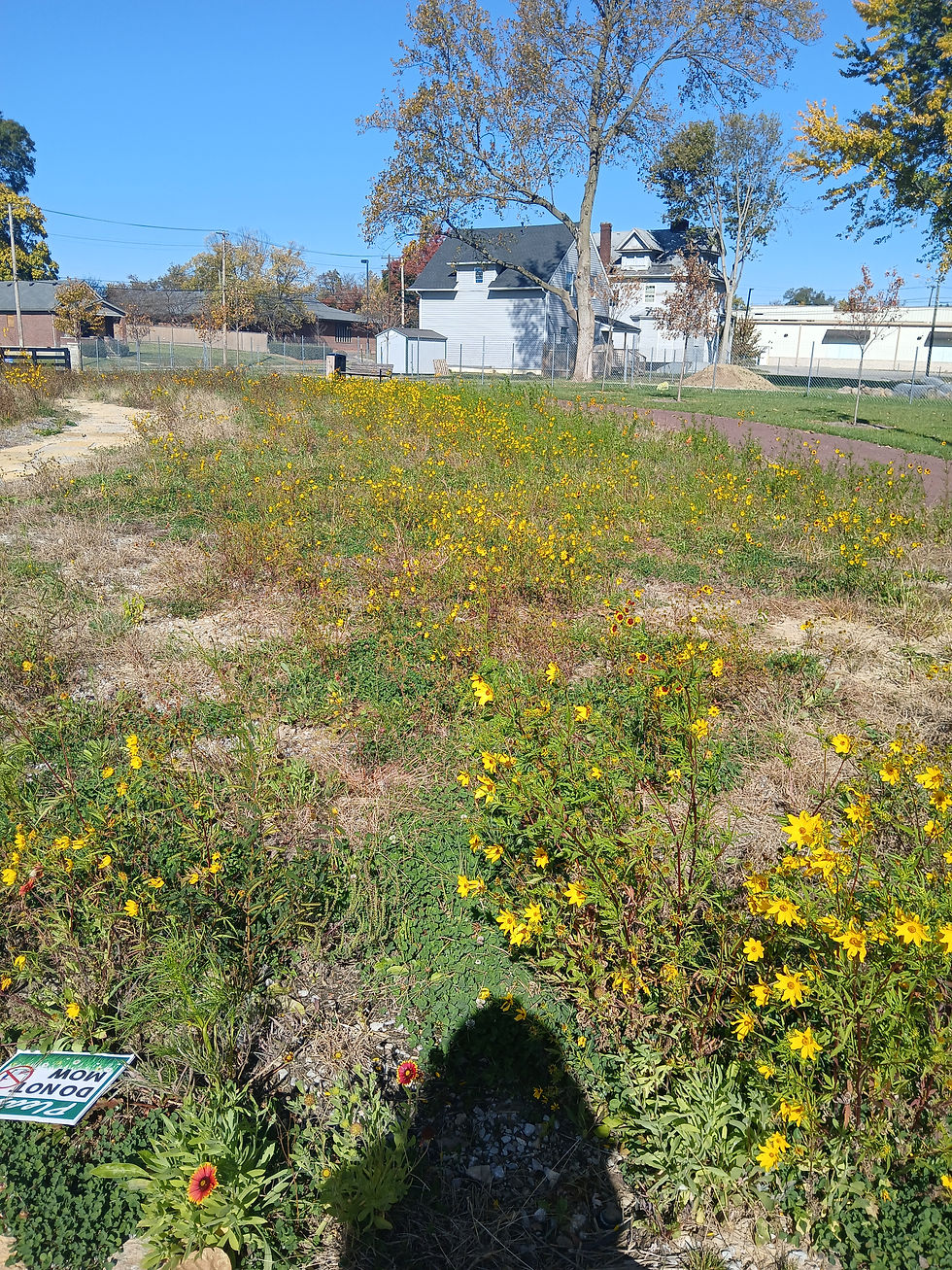
For the people behind Beargrass Thunder, the goal is not to eliminate lawns entirely. Instead, they hope to expand the definition of what a healthy yard can be. A patchwork of gardens, meadows, and traditional grass can support wildlife, reduce maintenance costs, and help manage water in a city built around creeks and floodplains.
In Louisville, that shift is already visible. What once looked like weeds to a passing code officer may now be recognized as a carefully planted habitat. As more residents experiment with native landscaping, the banks of Beargrass Creek are becoming a reminder to us all that urban spaces can still make room for the ecosystems that were there first.
For more information visit: www.beargrassthunder.com


Qué interesante propuesta para descubrir Durango combinando historia, cultura y naturaleza. Me encantó la idea de la ruta audioguiada. Saludos desde Loterías Mundiales, donde también disfrutamos compartiendo contenidos que inspiran nuevas experiencias y destinos.
One thing that stands out in Drive Mad is how responsive the controls are. Even small adjustments can make a big difference, which adds a layer of precision to the experience.
thank u, i like play sled rider